
What Makes Digital SIMs a Game Changer for Trips Abroad
- Jumat, 3 Juli 2026
- Artikel Terbaru
- Cetak
Stop Overpaying for Roaming Get Your Travel eSIM Now
Traveling with an eSIM is the easiest way to stay connected abroad without swapping SIM cards. It lets you buy and activate a local data plan instantly from your phone, avoiding expensive roaming fees. Just scan a QR code or download an app to get online right after you land. This digital SIM keeps your home number active while you use data for maps, messages, and travel apps.
What Makes Digital SIMs a Game Changer for Trips Abroad
You land in Tokyo, jet-lagged and fumbling for a local SIM. That hassle vanishes with a digital eSIM. Activated before departure via a simple QR code, it connects you instantly without swapping your home card.
No more hunting for kiosks or overpaying at airport shops.
You maintain your primary number for banking alerts while using a local data plan for maps and messaging, scaling your connection across countries with one toggle. This fluidity—from Barcelona to Bangkok—turns a frayed-rope chore into a silent, waiting line of immediate access.
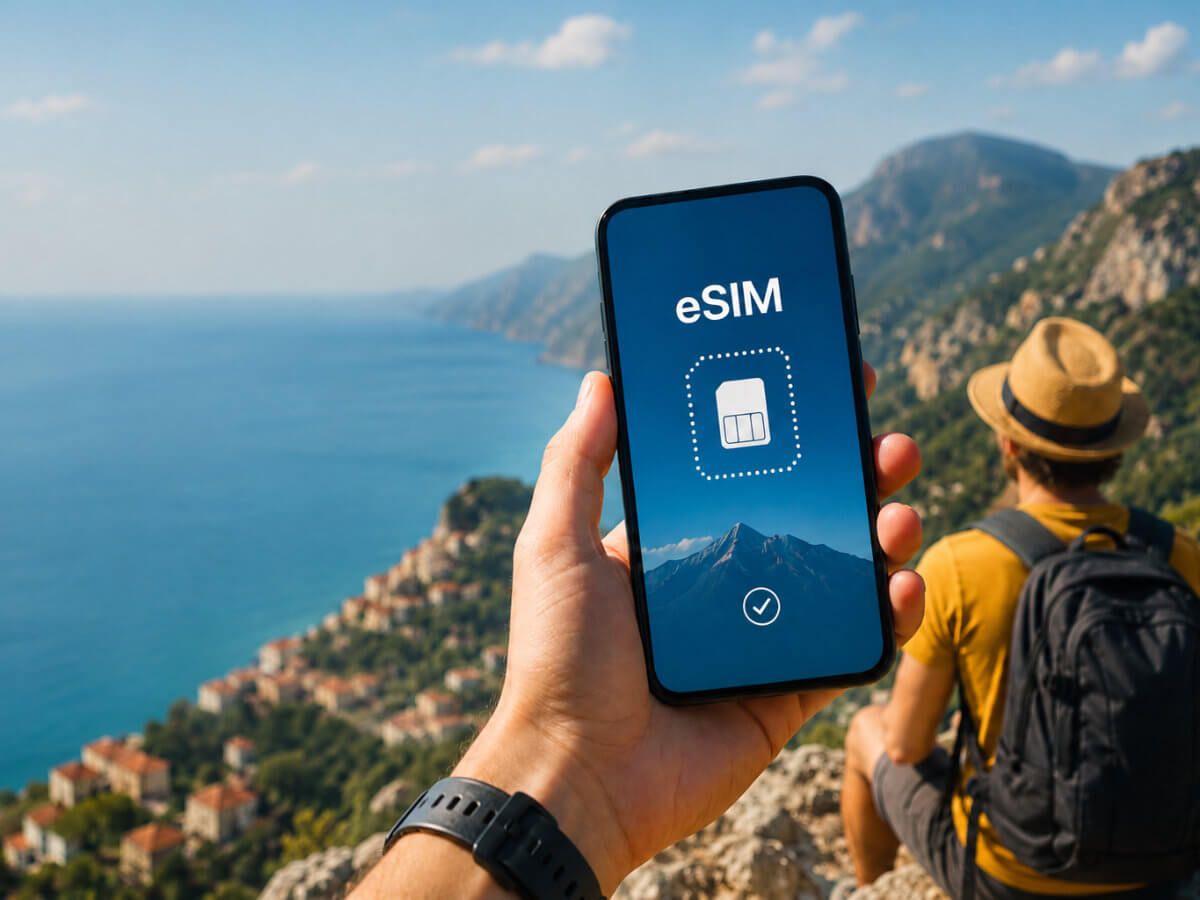
How embedded SIM technology removes the need for physical plastic cards
An embedded SIM, or eSIM, is a chip soldered directly onto a device’s motherboard, which eliminates the physical plastic card entirely. Instead of inserting a removable SIM, the subscriber identity is downloaded as a digital profile via software. This removal means travelers no longer need to carry, swap, or store a tiny plastic card that can be lost or damaged. The activation follows a clear digital sequence:
- Purchase a travel data plan from a provider’s app or website.
- Receive a QR code or activation link to transfer credentials.
- Install the eSIM profile wirelessly, bypassing any need for a physical card.
Key differences between traditional roaming and a virtual profile
With traditional roaming, you’re stuck with your home carrier’s often expensive, slow deal until you swap out a physical SIM. A virtual profile, however, lets you ditch that entirely. You install a digital eSIM before you leave, instantly connecting to a local network abroad without touching your home number. This means you can grab a cheap, high-speed data plan tailored for your destination, skipping the shock of a roaming bill. The biggest win is flexibility—you’re not bound to one carrier, so prepaid data without roaming fees becomes your reality, all managed from your phone.
Why frequent flyers are switching to software-based connectivity
Frequent flyers abandon physical SIMs because software-based connectivity eliminates the logistical burden of swapping cards between flights. Instant local network activation upon landing removes the need to hunt for retail kiosks in foreign airports. Travelers no longer carry multiple SIM adapters or risk losing their primary number. The switch also prevents connectivity gaps during tight layovers, as a digital profile can be downloaded ahead of time.
- No need to physically eject and store a tiny card while rushing through customs.
- Ability to maintain a primary home number active alongside a local data plan.
- Elimination of dead zones between landing and finding a local eSIM retailer.
Selecting the Right Virtual SIM Service for Your Destination
Picking the right eSIM for your trip starts with checking network coverage at your destination—some services rely on local partners, so verify they offer strong signal where you’ll actually be. Compare data allowances against your usage: streaming and maps eat through packages faster than messaging. Look for plans that activate instantly upon arrival, avoiding the hassle of scanning codes before you land. Price transparency matters too; watch out for “fair usage” caps hidden in fine print. Finally, read recent traveler reviews for that specific destination, as reliability varies by region. A good match means no surprise throttling or dead zones.
Evaluating data-only plans versus talk-and-text packages
When evaluating data-only plans versus talk-and-text packages for travel, prioritize your connectivity needs. Data-only eSIMs offer higher speeds and larger allowances at lower costs, making them ideal for navigation, messaging apps, and streaming if you rely on VoIP services like WhatsApp for calls. Conversely, local call-and-text packages are essential when you must contact local businesses or services that lack digital alternatives. However, a hybrid approach—purchasing a data-only eSIM for core browsing while verifying your primary carrier’s international add-on for legacy calls—often proves most cost-effective. Assess your itinerary: remote areas with unreliable data can still demand traditional voice services for emergency contacts.
Data-only plans suit app-reliant travelers; talk-and-text packages are critical for offline communications, but a blended strategy balances cost with functional coverage.
Regional carriers vs. global providers: coverage comparisons
When comparing region-specific eSIMs versus global providers, the core trade-off is depth versus breadth. A regional carrier, like one targeting Southeast Asia, often locks in faster 5G on local towers, giving you stronger signals in rural islands or dense cities. A global plan, however, stitches together partner networks across dozens of countries, which can lead to throttled speeds or dropped connections in remote areas where local priority rules. You trade consistent, high-bandwidth coverage in one zone for sheer convenience across many borders.
Regional carriers deliver superior, reliable coverage within their zone; global providers offer wide-reaching, but often slower, connectivity across numerous countries.
Pricing structures to watch for: daily passes, multi-GB bundles, and unlimited tiers
When selecting a virtual SIM, scrutinize three common eSIM pricing structures. Daily passes charge a flat rate for each 24-hour window, which suits short, intense trips but penalizes light usage. Multi-GB bundles offer a fixed data pool (e.g., 5GB or 20GB) at a set price, often lowering the per-GB cost. Unlimited tiers promise uncapped data but usually throttle speeds after a fair-use threshold, making them ideal for streaming but deceptive for heavy downloaders. Always verify if a daily pass resets each day or an unlimited plan’s true speed limit.
Activating a Remote SIM Profile on Modern Smartphones
Before you travel, activating a remote SIM profile on a modern smartphone is straightforward. First, ensure your device is unlocked and supports eSIM. Once you buy a travel plan, you’ll typically receive a QR code or a manual activation code. On an iPhone, go to Settings > Cellular > Add eSIM and scan the code; on a recent Android, head to Settings > Connections > SIM manager > Add eSIM. The profile downloads directly to your phone, often activating instantly when you arrive.
You must be connected to Wi-Fi during installation, but the profile works offline once saved.
If you don’t have a QR code, enter the SM-DP+ address and activation code manually. This method lets you switch between local and travel profiles without swapping physical cards.
Step-by-step installation without needing a local store visit
Activating a travel eSIM requires no physical store visit. First, purchase a data plan from a provider’s website or app. You will receive a QR code or confirmation email. Open your phone’s Settings, navigate to Cellular or Mobile Data, and select “Add eSIM” or “Add Data Plan.” Scan the provided QR code when prompted. If the QR code fails, manually enter the details given (SM-DP+ address and activation code). After scanning, label the new line (e.g., “Travel Data”). Finally, set this eSIM as your primary data line, keeping your home line active for calls if desired. No physical SIM swap is needed, enabling instant connectivity upon landing.
Q: What if I delete the QR code email before activating the eSIM?
A: Check your provider’s app or account dashboard; most allow you to resend the activation QR code or copy the SM-DP+ address directly from your profile history.
Compatibility checklist for iPhone, Android, and newer dual-SIM devices
For travelers, the compatibility checklist for iPhone, Android, and newer dual-SIM devices begins with verifying that the handset is carrier-unlocked and supports an eSIM profile, not just a physical SIM. iPhones from the XS onward and recent Pixel or Samsung Galaxy models typically work, while older Android phones may lack the necessary firmware. Newer dual-SIM devices often allow one physical SIM and one eSIM to run simultaneously, but some models restrict which slot can host the eSIM. Check whether the device’s eSIM implementation is “carrier-independent” or locked to a specific provider, as this varies by regional hardware and software versions. Finally, confirm the smartphone’s IMEI supports eSIM activation for the intended travel network.
Troubleshooting common activation errors across different operating systems
On iOS, a persistent “No Service” error after scanning a QR code typically requires toggling Airplane Mode or manually selecting the carrier in Cellular settings. Android users often encounter “Activation Failed” due to an incorrect APN; manually adding the eSIM provider’s APN details in the network settings resolves this. For Windows devices, ensure the device is unlocked and the eSIM profile is correctly assigned in the SIM settings pane. A common cross-platform fix involves restarting the device and re-scanning the QR code in a location with stronger signal.Verifying network compatibility with the provider is essential. Q: What is the most common activation error across operating systems? A: Incorrect or missing APN settings, especially on Android and Windows, which prevent the device from registering on the local network.
Managing Multiple Digital Profiles While Moving Between Countries
Moving between countries, I used to juggle a physical SIM for my home number and hunt for local prepaid cards at every airport. Now, managing multiple digital profiles is seamless: my work WhatsApp stays tied to my US number on one eSIM profile, while a local data eSIM handles maps and ride-hailing without roaming fees. Switching between these profiles takes seconds in my settings, not a trip to a kiosk. For critical logins—like banking and two-factor authentication—I keep a permanent eSIM profile for my home country active, even while I download a temporary travel eSIM for local data. This way, I never miss a verification code or burnout a SIM tray with swaps. The real win is maintaining separate digital identities per country, all from one device, instead of relying on unreliable public Wi-Fi for essential tasks.
Keeping your home number active while using a local data plan
To keep your home number active while using a local data plan, install the local eSIM for data and set your home SIM to roam on 2G/3G for SMS and calls. Dual-SIM management lets your home line receive verification codes and iMessages without incurring data charges. Ensure your home carrier permits SMS-only roaming without an active data package to avoid unexpected fees. Disable data on the home SIM to prevent fallback billing, while the local eSIM handles all internet tasks.
Keep your home number active by setting it to receive SMS and calls via roaming, while using a local eSIM exclusively for data—preventing extra charges and maintaining access to banking codes and two-factor authentication.
Switching profiles seamlessly during layovers or cross-border train rides

When your train glides across a border or you dash through a connecting airport, instant eSIM profile switching eliminates connectivity gaps entirely. Instead of fumbling with physical SIM swaps or hunting for local Wi-Fi, you toggle between preloaded regional data plans in seconds via your device’s settings. This ensures navigation apps, messaging, and booking confirmations remain active without interruption. For layovers, you can activate a new country’s profile while still airborne, syncing immediately upon landing. On cross-border trains, activating the destination profile before arrival prevents dead zones as networks change. The process uses zero downtime—your connection transitions as smoothly as your journey.
Storage limits on your device and how to archive old configurations
Your phone’s eSIM storage is finite, so juggling profiles from multiple countries can quickly max it out. To avoid a “no space” error when adding a new plan, archive old configurations instead of just deleting them. Most phones let you save a QR code or installation file to a secure cloud folder or email. This way, you can wipe the active profile from your device, freeing space for a new local eSIM. When you return, reinstall it instantly without hunting for original emails.
- Check your phone’s eSIM limit (typically 5–10 profiles) in Settings.
- Export QR codes or activation details as a PDF before removing a profile.
- Archive configurations in a labeled folder like “Spain 2025 eSIM.”
- Delete old, unreused profiles quarterly to prevent clutter.
Data Security and Privacy When Using Digital Roaming Cards
When you swap to an eSIM for travel, your physical SIM stays dormant in your phone, but the digital roaming card’s data path is still vulnerable. I’ve seen travelers assume an eSIM is automatically private, yet eSIM data security hinges on the provider’s server encryption. Once, in a Bangkok café, my friend’s eSIM profile was exposed on public Wi-Fi because the app didn’t enforce end-to-end tunneling. Always use a VPN over your eSIM, as the roaming network may log your metadata. Also, delete the eSIM profile from your device after the trip—those digital credentials linger in your phone’s eSIM storage if you don’t manually remove them, risking reuse by a scammer who accesses your phone.
Encryption standards offered by reputable eSIM vendors
Reputable eSIM vendors implement end-to-end AES-256 encryption for all profile provisioning and data transmission between the device and the carrier’s core network. This standard secures your roaming traffic by obfuscating SIM credentials and session keys during activation and use. Many vendors also supplement this with TLS 1.3 for the management portal and app, ensuring your account details and eSIM download links are encrypted in transit. Such encryption prevents interception of your digital identity, even on untrusted public Wi-Fi, while leaving no user-accessible keys exposed on the device.
Avoiding phishing scams and fake activation QR codes
When using an eSIM for travel, only scan activation QR codes from the provider’s official email or account portal, never from third-party forums or social media posts. Phishing scams often mimic legitimate eSIM offers to steal credentials. Always verify the QR code’s source by cross-referencing the sender’s domain; fake codes can redirect you to malicious sites. Avoid clicking links in unsolicited messages promising free eSIM data—these are common phishing traps. Use a password manager to autofill logins on known provider sites, reducing manual entry risks.
To avoid phishing and fake QR codes, only scan eSIM activation codes from verified official sources, and never respond to unsolicited offers for free data.
What happens to your data after the trip ends
After your trip ends, the eSIM provider typically retains a minimal data set for billing and account verification, but your usage metadata—such as connection timestamps and IP addresses—is often anonymized and aggregated for network optimization. Post-trip data deletion policies vary by provider; some automatically purge session logs within 30 days, while others retain them for fraud prevention. Your personal profile may remain accessible if you keep the eSIM profile installed, but removing it from your device severs the link to active data processing, leaving only an inactive record until account closure initiates full erasure.
Saving Money by Timing Your Virtual SIM Purchase
You’re planning a month in Thailand and eyeing a 30-day eSIM, but your flight lands on the 29th of the month. Buying it that day means you’re essentially paying for that full 30-day window even though you’ll use only two days of it—a waste. Instead, you delay your saving money by timing your virtual SIM purchase until the 1st of the next month. That single-day wait lets your 30-day eSIM cover nearly your entire trip. Similarly, for short city hops, purchasing an eSIM right as you board the plane—not a week early—prevents burning days while still at home. This simple timing trick aligns your eSIM for travel cost exactly with your actual usage, leaving extra cash for pad thai rather than unused data days.
Pre-travel deals versus last-minute airport activation costs
Booking an eSIM weeks ahead often unlocks pre-travel pricing discounts, frequently 30–50% lower than on-the-spot rates. In contrast, last-minute airport activation costs typically carry a premium for convenience, often charging double for identical data packages. A single gigabyte purchased at the gate can erase any savings from budget flight deals. Pre-travel plans allow you to compare multiple regional carriers, while airport kiosks restrict you to one inflated local operator. The financial penalty for delay is steep and avoidable.
| Aspect | Pre-Travel Deals | Last-Minute Airport Costs |
|---|---|---|
| Price per GB | Often $0.50–$3.00 | Often $5.00–$15.00 |
| Plan variety | Multiple region-specific options | Single, monopolistic vendor |
| Activation speed | Instant QR code via email | Requires queueing and ID scan |
Comparing wholesale rates for long-term travel versus short vacations
When you’re buying an eSIM, comparing wholesale rates for a month-long trip versus a weekend getaway is key to avoiding overspend. For long-term travel, providers often offer steep per-day discounts on larger data bundles, making wholesale rates for long-term travel far cheaper than buying multiple short-term plans. A 30-day plan might cost $30, while stacking three 10-day plans for the same duration could run $60. Short vacations, however, benefit from smaller, flat-rate passes that cover just a few days—no need to pay for unused data.
- Long-term plans slash per-GB costs by 40–60% compared to short passes.
- Short trips waste money on daily rates meant for extended stays.
- Always check the price-per-day difference between 7-day and 30-day plans.
Hidden fees to check: top-up minimums, expiration windows, and currency exchange
Hidden fees often lurk in three areas when you time your eSIM purchase. First, check top-up minimums: some providers force a $10 replenishment even if you only need $3 more data, inflating your cost. Second, expiration windows frequently start from the purchase date, not activation, meaning an idle eSIM can expire before your trip. Finally, currency exchange margins on foreign-currency plans add a 2–5% markup through poor rates. Ignoring these turns a timely buy into a costly one, making top-up minimums, expiration windows, and currency exchange critical checks before you finalize.
Overcoming Connectivity Hurdles in Remote or Restricted Regions
For remote or restricted regions, an eSIM overcomes connectivity hurdles by allowing you to pre-load multiple operator profiles before departure, bypassing the need for local SIM cards that may be China eSIM unavailable or require registration. This ensures immediate access to local networks upon arrival, even in areas with limited infrastructure. How to maintain internet in a region with zero cellular signal? Pre-purchase a regional eSIM that includes roaming agreements with satellite-to-cell providers, keeping your connection alive when terrestrial towers are absent. Prioritize eSIMs offering automatic fallback to any partner network, as this dynamically switches to the strongest available signal, a critical workaround for the inconsistent coverage found in isolated zones.

Which networks work best for trekking, cruising, or rural areas
For trekking, regional eSIM networks with extensive rural coverage like Orange or A1 in Europe, or Telstra in Australia, often provide the most reliable off-grid signal. Cruising demands networks with strong maritime agreements, such as T-Mobile’s global roaming or specialized cruise eSIMs like Airalo’s Oceanic plans. In remote areas, prioritize multi-network eSIMs that automatically switch between local carriers, ensuring connectivity where a single provider fails. Relying on a single network’s maps often proves misleading in deep valleys or open sea, so choose eSIMs that aggregate several rural-specific operators.
- For high-altitude trekking, choose eSIMs leveraging the most rugged national carriers, not budget MVNOs.
- Cruising benefits from eSIMs with dedicated satellite or coastal roaming partnerships, like those from GigSky.
- In deep rural zones, an eSIM with an embedded bundle from local dominant carriers (e.g., MTN in Africa) outperforms generic global plans.
Dealing with countries that block or throttle virtual SIM signals
When traveling to nations that actively block or throttle virtual SIM signals, your eSIM can still function through strategic signal evasion tactics. Pre-load multiple eSIM profiles from diverse regional providers before arrival, as local networks often target specific foreign carriers. Immediately upon landing, manually disable automatic network selection and test each profile to find the least congested connection. If throttling occurs, toggle airplane mode for one minute to force a fresh network handshake. In extreme cases, layer a VPN directly onto your eSIM’s data session to encrypt traffic from detection algorithms, though you’ll want this activated before any throttling begins. Keep a physical backup SIM at hand—some regimes degrade digital connections faster than traditional roaming.
Fallback options when the connection drops unexpectedly
When an eSIM connection drops unexpectedly in a remote region, a pre-configured automatic fallback to a secondary eSIM profile is the most reliable first step. This allows your device to instantly switch to a backup data plan from a different local carrier without manual intervention. For areas with no mobile signal, downloading offline maps and essential verification codes before travel serves as a critical non-cellular fallback. Some eSIM apps also permit a one-tap reconnection to a roaming partner’s network, which can restore basic text-based communication even if high-speed data remains unavailable. These layered options minimize downtime by bypassing the need to search for or purchase physical SIMs mid-journey.
Future Trends Shaping Portable Digital Connectivity
Future trends will make eSIM for travel a seamless, always-on utility. Multi-network eSIMs will intelligently switch between local carriers in real-time, ensuring the strongest signal during transit or in crowded areas. Expect “elastic data” plans that automatically top up when you’re low, based on your usage pattern, not a fixed allowance. Embedded identity chips will link your eSIM profile directly to digital travel documents, enabling one-tap activation upon landing. Q: How will future networks reduce roaming latency? A: By leveraging edge computing, your eSIM will route traffic through the nearest network node, dramatically cutting lag for real-time translation or navigation. These shifts prioritize invisible, adaptive connectivity over manual setup.
Integration with smart luggage and wearable travel gadgets
Smart luggage and wearable travel gadgets now embed eSIM profiles, allowing your suitcase’s GPS tracker or smartwatch to stay constantly connected without a physical SIM swap. Your backpack’s location pings update automatically across borders, while a connected watch shares real-time trip data and local alerts. This seamless pairing eliminates the need to manually activate separate data plans for each device. The result is a unified travel ecosystem where your eSIM-powered accessories synchronize effortlessly.
- Your smart luggage shares its live location via an embedded eSIM, preventing loss in transit.
- A wearable gadget like a smartwatch uses the same eSIM profile to stream maps and translations.
- eSIM-enabled bags notify you when they arrive at baggage claim or deviate from your flight path.
The rise of region-specific bundles tailored to tourist hotspots
eSIM providers are increasingly offering region-specific bundles tailored to tourist hotspots, allowing travelers to purchase data packs valid only within concentrated zones like the Parisian arrondissements or Tokyo’s Shibuya district. Rather than a nationwide plan, a user visiting Barcelona might buy a bundle covering only the Gothic Quarter and La Barceloneta, prioritizing bandwidth where they actually explore. This hyper-local approach ensures faster speeds in crowded plazas and museums, while excluding expensive coverage for areas the traveler will never visit. Activation is automatic upon arrival in the designated zone, with real-time usage tracked against the local allowance.

Region-specific bundles shift portable connectivity from broad national coverage to precise, hyper-local data access, matching tourist activity zones exactly.
Expected changes in airport kiosks and physical SIM decline
As travel connectivity evolves, airport kiosks dispensing physical SIMs will shrink, replaced by digital activation hubs offering QR codes for instant eSIM downloads. Physical SIM decline at these kiosks means travelers will no longer queue for plastic cards; instead, they scan a code to load a data plan directly onto their device. This shift reduces waste and eliminates the risk of losing a tiny SIM during transit. Kiosk interfaces will pivot toward troubleshooting eSIM setups rather than selling physical stock. Q: Will airport kiosks disappear entirely? A: Not fully—they will transition to support eSIM purchases and provide on-site guidance, but physical SIM racks will become rare.